For senior living communities, nursing homes, and memory care, the best activities are the ones that include everyone and ask very little. Music bingo does both. It’s built on recognition, not skill — so a resident who struggles with reading, math, or fine motor tasks can still play and win. And because music reaches deep into long-term memory, the songs often connect with residents that little else does.
🎵 Wasingo runs the whole game for you — real song clips, a card on every phone, the board on your TV, and wins verified automatically. Host your first game night free.
Why music bingo is so accessible for seniors
- No reading or math. A song is the clue. Residents who can’t read a number-bingo card can play this one with ease.
- Big, simple cards. Use a small 3×3 grid with large song titles so there’s little to scan and easy to mark.
- The board is on the TV. Songs light up on a big screen the whole room can see, with sound everyone can hear.
- It works in memory care. Music from a person’s youth taps long-term memory and often sparks recognition, singing, and conversation even when recent memory has faded.
The therapeutic side
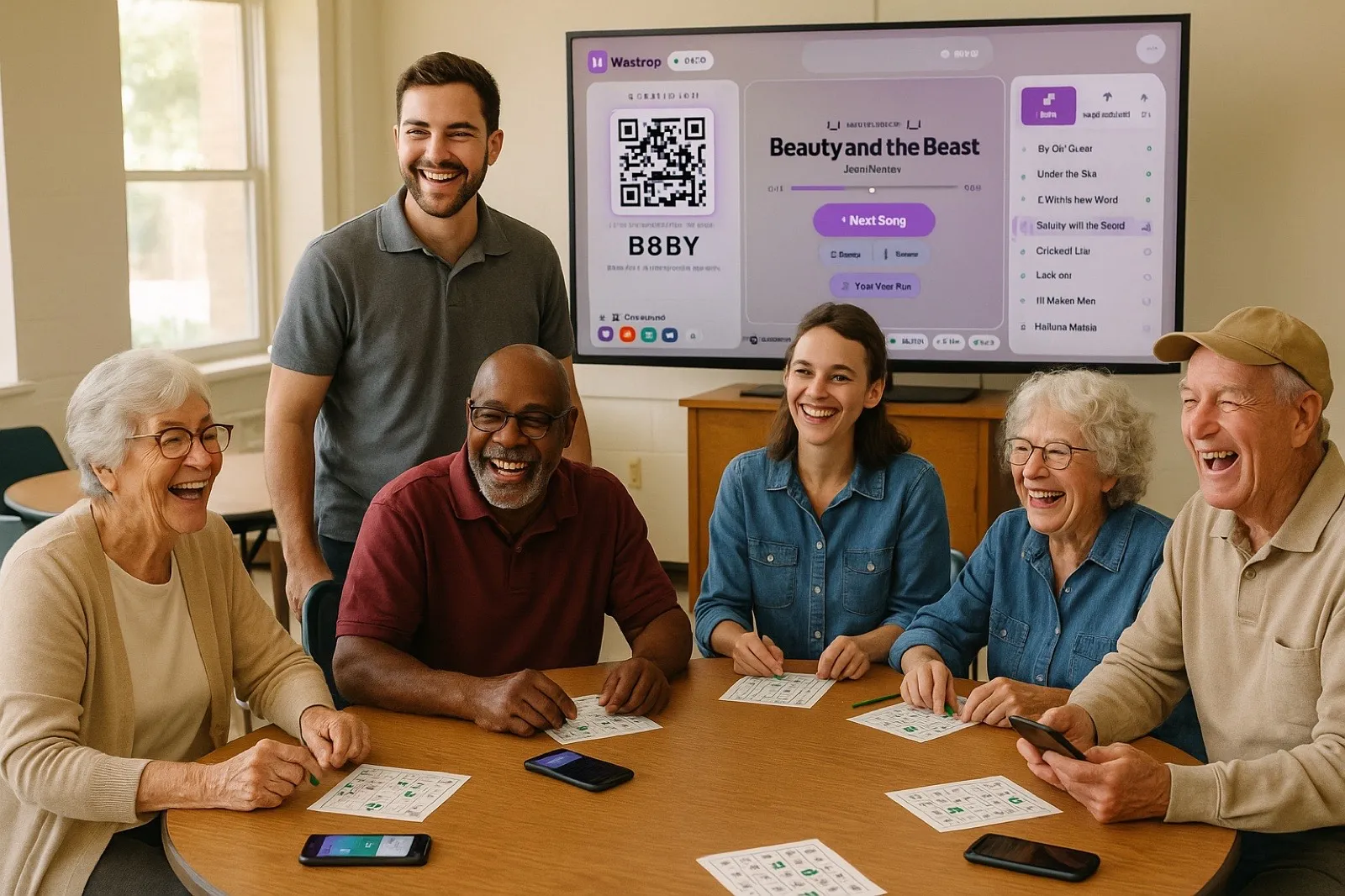
Activity directors know music does things other games can’t. A familiar tune can lift mood, ease agitation, prompt reminiscence, and get a quiet room singing together. Music bingo wraps that in a gentle, social structure — residents mark cards, share memories the songs stir up, and celebrate wins as a group. It’s engagement and connection, not just a way to pass an afternoon.
Best song eras & themes
Pick music from the decades residents grew up with — usually their teens and twenties. Tune the eras to your community’s ages:
- 1950s rock & roll and doo-wop — Elvis, Buddy Holly, The Platters, Chuck Berry.
- 1960s classics — The Beatles, Motown, Beach Boys, Patsy Cline.
- 1970s hits — for younger residents, the soul, country, and pop everyone knows.
- Big-band, crooners & standards — Sinatra, Nat King Cole, Ella Fitzgerald for the oldest groups.
- Gospel, hymns & holiday classics — deeply familiar and great for seasonal sessions.
When you build the playlist, you can search exact tracks or let Wasingo fill a themed era list for you, then preview the clips.
Tips for running a session
- Go slow. Play each clip a little longer and pause generously between songs so everyone has time to find and mark the square.
- Use a 3×3 card so a round finishes without fatigue and produces winners often.
- Lean into the sing-along. Let the room finish a chorus before moving on — the singing is the point.
- Help is part of it. Staff or volunteers can sit with residents who need a hand marking, turning it into one-on-one connection.
- Announce songs aloud too. Saying the title and artist as each plays adds another cue for residents with hearing differences.
New to it? See how to play music bingo and what music bingo is. You can run sessions with free music bingo, and for family-visit days the all-ages family game night approach works beautifully across generations.
Keep exploring
Frequently asked questions
Why is music bingo good for seniors?
It’s accessible and joyful: there’s no reading or math, cards are big and simple, and it runs on recognizing songs. Music from a person’s youth reaches deep into long-term memory, so even residents in memory care can recognize tracks, sing along, and connect.
What songs are best for senior music bingo?
Pick the eras residents grew up with — usually 1950s rock and roll, 1960s classics and Motown, 1970s hits, and big-band crooners and standards for the oldest groups. Gospel, hymns, and holiday classics work well too. The more familiar, the stronger the response.
How do I make music bingo accessible in memory care?
Use a small 3×3 card with large titles, play clips a little longer with generous pauses, announce each song’s title aloud, and have staff or volunteers sit with residents who need help marking. See the full setup.