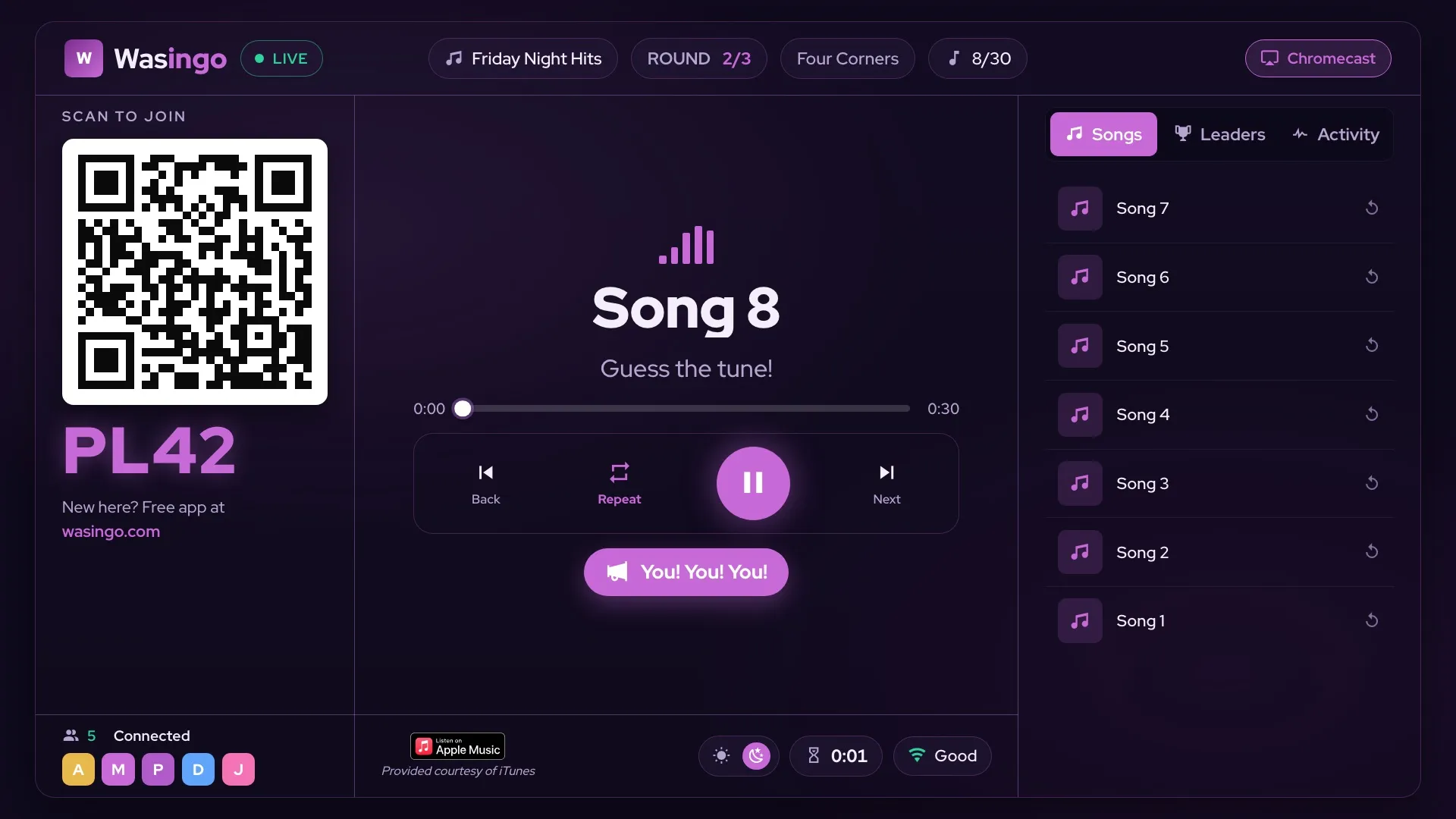
Hosting music bingo means running a party game where players listen for real songs and mark them off a bingo card instead of numbers. It’s the same idea as name-that-tune, dialed up for a crowd — and it works just about anywhere: house parties, bars and restaurants, offices, classrooms, senior centers, and fundraisers. Whether you want to throw a casual game night or organize a bigger event, the job of the host is the same: pick great songs, get a card to everyone, put the board where the room can see it, and keep the energy up.
🎵 Wasingo does the heavy lifting for you — build a playlist from real songs or auto-fill a themed one, hand every phone its own unique card, cast the board to your TV, and let wins verify automatically. Your first game is free to host, players are always free, and Pro is $4.99/mo. New here? Start with the music bingo guides hub.
How to run a music bingo night step by step
Here’s the whole flow from setup to crowning a winner. Do it with an app like Wasingo or with a speaker and printed cards — the steps are the same.
Plan and pick the playlist
Choose a theme and gather 16–30 songs the room will recognize fast, like 80s Night or one-hit wonders. Build the playlist from real songs or let Wasingo auto-fill a themed one for you.
Get everyone a card
Give every player a card. In Wasingo each phone gets its own unique card automatically, or you can hand out printable cards. Every card has a different mix of songs so no two boards match.
Set up the TV and sound
Put the board on the big screen with AirPlay or Chromecast and test your speaker volume before guests arrive. Real song clips play through Apple Music or Spotify, so make sure you’re signed in.
Brief the room & announce the pattern
Welcome everyone, explain that they mark a square when they hear a song on their card, and announce the winning pattern — a line, four corners, or a full blackout — before the first round.
Run the rounds & keep the energy up
Play the clips, pause between songs, and keep the room hyped with reactions and a little commentary. Start with an easy line round, then raise the stakes with harder patterns.
Verify wins & crown a champ
When someone shouts “Bingo!” the win is verified automatically against the songs that actually played, so there’s never a dispute. Celebrate the winner and start the next round.
How to pick the right playlist
The playlist is the whole game, so lean on songs your crowd will know in the first few seconds. Pick a theme that fits the room — a decade like the 80s or 90s, a genre like pop, country, or hip-hop, or an artist everyone loves — and mix in a few surprises to spark shouts of recognition. Aim for 16–30 songs per round; that’s enough variety that cards fill at different times without any round dragging. In Wasingo you can build the list from real songs yourself or auto-fill a themed playlist, and clips play through Apple Music or Spotify so it’s the actual recordings, not covers. For deeper inspiration, browse our songs & playlists ideas.
Setting up the room, cards, and TV
Great setup is what makes hosting feel effortless. Get a card to every player — Wasingo gives each phone a unique card automatically, or you can print cards for a no-phone crowd. Put the board on the biggest screen in the room by casting with AirPlay or Chromecast, so everyone can see the songs as they’re called and follow along. Test your sound before guests arrive: point a speaker at the crowd, set a volume that’s loud enough to feel but still lets people talk, and do a quick clip to confirm everything’s connected. A little prep here means you press play and never touch a cable again all night.
Host tips to keep the energy up
The best music bingo host tips are less about rules and more about vibe. Play emcee: hype the near-wins, call out big sing-alongs, and let a crowd favorite ride a few seconds longer when the whole room is belting it. Start with an easy single-line round to build confidence, then step up to four corners or a full blackout so the tension climbs. Keep pauses between songs short but real — a beat of silence builds suspense and gives players time to mark their square. Small prizes, themed costumes, and a running “champion of the night” tally turn a good game into one people ask you to run again.
How to verify a win
When a player completes the announced pattern they shout “Bingo!” and you confirm the win. The old-school way is to keep a master list of every song played, in order, and check the caller’s marked squares against it. With Wasingo there’s nothing to check by hand — wins are verified automatically against the songs that actually played, so the moment is instant and there’s never an argument. Confirm, celebrate the winner, reset the pattern, and roll straight into the next round.
Keep exploring
Frequently asked questions
How do you host a music bingo night?
Pick a theme and playlist, get a card to every player, put the board on your TV and test the sound, announce the winning pattern, then play song clips and mark squares until someone completes the pattern. With Wasingo the cards, the TV board, and win-checking are handled for you, so you just press play and host.
How many songs do I need to host music bingo?
Around 16 to 30 songs is the sweet spot for one round — enough variety that cards fill at different times but not so many that a round drags. For a longer night, line up a few themed playlists so you can switch it up between rounds.
What equipment do I need to run music bingo?
At minimum you need a way to play the songs and cards for players. With Wasingo you need a phone or tablet to host, a speaker or the room’s sound system, and a TV with AirPlay or Chromecast to show the board — players use their own phones for cards, or you can print cards instead.
How long does a music bingo night last?
A single round usually runs 15 to 30 minutes depending on how many songs you play and how fast the room recognizes them. Most hosts run three or four rounds for a full night of about 60 to 90 minutes, adjusting patterns to keep it exciting.
Can I host music bingo at a bar or fundraiser?
Yes. Music bingo is a favorite for bars, restaurants, offices, classrooms, senior centers, and fundraisers because anyone can play and it fills a room with energy. Put the board on the venue’s TV, use the house speakers, and let guests join from their own phones.